
What commercial solar means in Canada
Commercial solar in Canada is no longer a niche project reserved for very large facilities. Warehouses, retail plazas, industrial buildings, offices, farms, and multi-building properties are evaluating solar as a way to cut electricity costs, hedge future rate increases, and strengthen long-term operating margins.
For most business buyers, the conversation is not just about panel price. It is about usable roof area, annual consumption, demand charges, structural considerations, utility rules, financing, and what incentives can be stacked to improve project payback. Commercial solar research pages need to go deeper than residential quote pages and generic rebate summaries — this page is built for that.
Who commercial solar works best for
Solar performs strongest when a building's daytime electrical load coincides with when panels produce. That makes some property types dramatically better candidates than others.
System types and mounting options
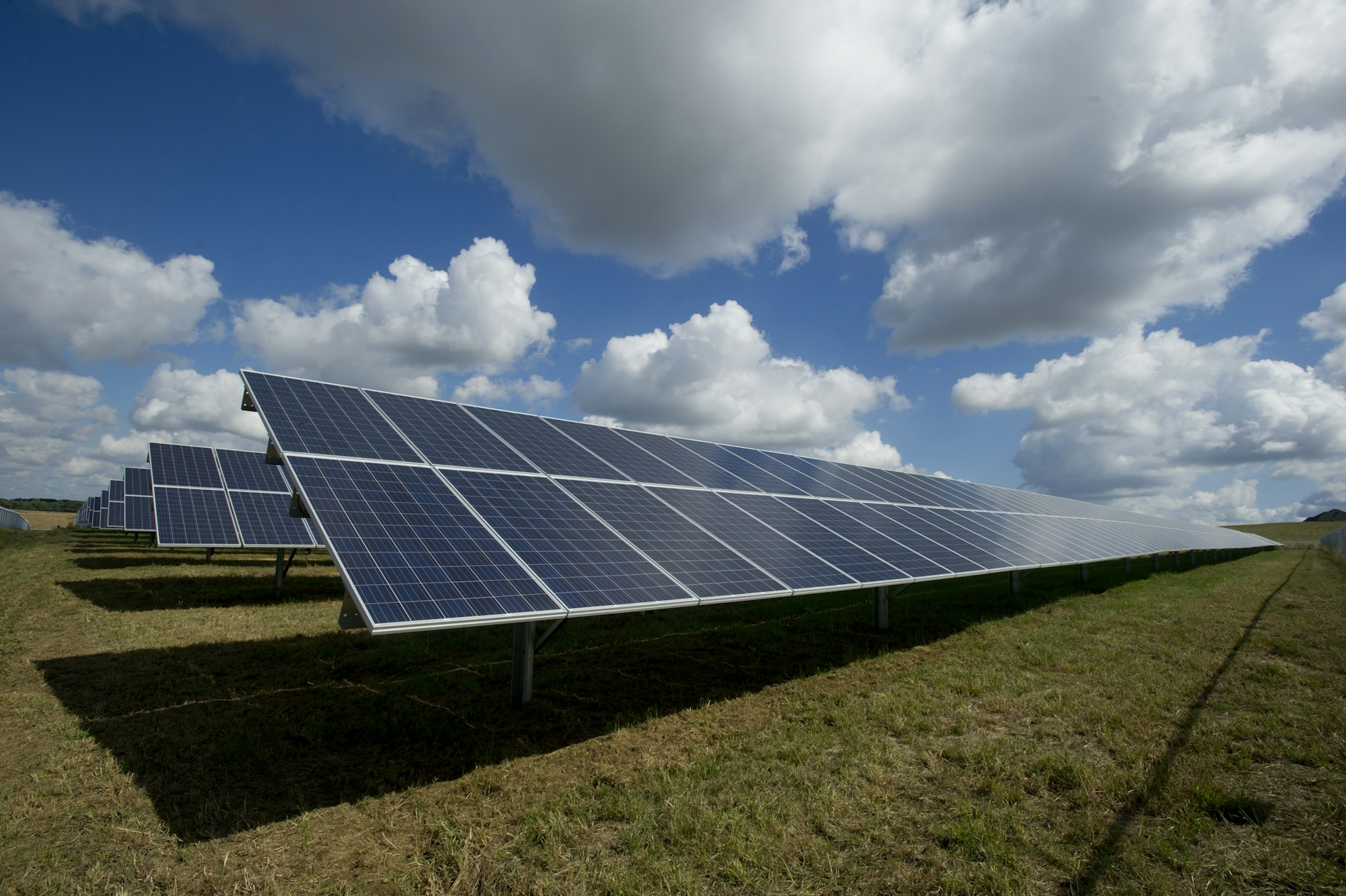
Commercial installations in Canada usually fall into four categories: rooftop (fastest and cheapest per watt for structurally sound roofs), ground-mount (larger arrays with optimal orientation on available land), solar carports (dual-use asset that also generates parking cover and pairs well with EV charging), and battery-ready designs (adding DC-coupled or AC-coupled storage for resilience, peak shaving, or demand-charge management).
Most Canadian commercial projects start rooftop and add batteries later. The exception is sites with poor roof condition, high shading, or attractive land nearby — those often benefit from ground-mount from day one.
Cost drivers for commercial solar in Canada
A realistic 2026 range for turnkey Canadian commercial solar is $1.80–$2.50 per watt installed, before incentives. The exact number depends on:
- Roof type and structural work — membrane roofs are typically fastest; steep or old roofs may need reinforcement.
- Utility interconnection scope — larger projects often trigger transformer upgrades or utility studies.
- Demand charges — high-demand facilities benefit disproportionately from solar plus storage.
- Electrical service upgrades — main service capacity, three-phase considerations, and equipment room space.
- Equipment tier — Tier 1 panels and best-in-class inverters cost more but ship with stronger warranties.
Federal and provincial incentives for commercial solar
The single biggest driver of Canadian commercial solar economics in 2026 is the federal Federal Clean Technology Investment Tax Credit — a refundable tax credit worth up to 30% of eligible capital costs for qualifying clean-technology property, including commercial rooftop and ground-mount solar.
Provincial programs stack on top of the federal ITC. Ontario's Save on Energy retrofit stream, Quebec's Hydro-Québec business grant (up to $1,000/kW installed and up to 40% of eligible costs), Alberta's municipal Clean Energy Improvement Program (CEIP) financing, and British Columbia's PST exemption on solar equipment are the biggest current levers. See the province snapshots below, or the deep-dive incentive pages:
Commercial solar ROI and payback factors
Typical Canadian commercial solar payback in 2026 runs 5–10 years for projects that fully use the Clean Tech ITC and applicable provincial supports. Alberta, Ontario, and Quebec tend to sit at the shorter end because of higher commercial rates or strong provincial grants. Payback lengthens for buildings with low daytime load, sites with poor irradiance, or projects that can't claim the full 30% ITC.
Beyond payback, most Canadian commercial systems generate a positive 25-year net present value under conservative electricity-inflation assumptions. Solar essentially becomes a hedge against future rate increases — every year the utility raises rates, the value of on-site production goes up.
How to choose a commercial solar installer in Canada
Commercial procurement is different from residential. The right installer partner:
- Has completed at least a handful of commercial projects in your province at similar scale.
- Can produce structural engineering stamps, single-line diagrams, and utility interconnection paperwork without hand-holding.
- Provides transparent equipment specs, warranty terms, and performance monitoring commitments.
- Understands your utility's specific interconnection process and lead time.
- Comfortable modeling ITC treatment and helping you assemble incentive documentation.
You should compare at least three commercial-capable installers before signing. SolarQuotes.ca can match your project scope with commercial-experienced installers in your province.
We'll match your building type, province, and consumption profile with vetted commercial solar installers.
Get commercial solar quotesarrow_forwardProvince-by-province commercial solar snapshot
Every province has a different mix of federal, provincial, utility, and municipal supports. Below is a 2026 snapshot for the six highest-opportunity commercial markets — click through for the full incentive breakdown per province.
- check_circleSave on Energy Retrofit Program: IESO retrofit incentives are open to commercial, industrial, institutional, multi-family, and agricultural facilities, with tiered structures for smaller systems and projects up to 1 MW.
- check_circleFederal Clean Tech ITC: Stacks with Save on Energy — up to 30% refundable credit on eligible commercial solar property.
- check_circleHydro-Québec Business Solar Grant: Up to $1,000/kW installed and up to 40% of eligible costs for qualifying commercial self-generation projects (2026).
- check_circleFederal Clean Tech ITC: Applies to eligible commercial capital costs on top of the Hydro-Québec grant.
- check_circleMunicipal CEIP financing: Alberta's Clean Energy Improvement Program (CEIP) is active in many municipalities and can finance commercial solar through property assessments.
- check_circleFederal Clean Tech ITC: Alberta businesses can pair the 30% federal ITC with Alberta's competitive market pricing for strong project economics.
- check_circlePST exemption on solar equipment: British Columbia exempts qualifying solar equipment from provincial sales tax for eligible installations.
- check_circleBC Hydro commercial programs: Load-displacement and battery-related incentives are available for eligible commercial customers.
- check_circleSaskPower net metering: Small commercial customers can offset consumption under SaskPower's net-metering program.
- check_circleFederal Clean Tech ITC: The 30% federal ITC remains the strongest national lever for Saskatchewan commercial solar projects.
- check_circleManitoba Hydro net billing: Commercial customers use net billing rather than net metering — sizing decisions should reflect billed export rates.
- check_circleFederal Clean Tech ITC: Applies to eligible commercial solar capital costs in Manitoba.
Commercial solar calculator
Estimate your project size, cost, federal Clean Tech ITC value, and payback for a Canadian commercial solar installation.
Estimate your commercial solar project
Enter your consumption, roof or site details, and the tool will estimate system size, cost, federal Clean Tech ITC value, and payback for your project.
Estimates are for planning purposes only. Real project economics depend on site conditions, utility interconnection, and equipment selection. Get a professional quote for site-specific numbers.
Enter your consumption details on the left and click Calculate estimate to see project size, cost, incentives, and payback.
Commercial solar FAQs
How much does commercial solar cost in Canada?add
Commercial solar in Canada typically ranges from $1.80 to $2.50 per installed watt in 2026, before incentives. That works out to roughly $180,000 to $250,000 for a 100 kW rooftop system on an average commercial building. Federal Clean Technology ITC support of up to 30% can bring net cost down by tens of thousands. Actual pricing depends on roof type, structural work, interconnection, electrical upgrades, and equipment selection.
What tax credits are available for commercial solar in Canada?add
The most important national program is the federal Clean Technology Investment Tax Credit — a refundable credit worth up to 30% of eligible capital costs for qualifying clean-technology property, including commercial rooftop and ground-mount solar. Provincial programs stack on top: Ontario's Save on Energy retrofit incentives, Quebec's Hydro-Québec business grant (up to $1,000/kW), Alberta municipal CEIP financing, and BC's PST exemption on solar equipment are the biggest current levers.
Can small businesses qualify for solar incentives?add
Yes. The federal Clean Tech ITC is available to Canadian-controlled taxable corporations, so it applies to eligible small business projects as well as large industrial ones. Provincial programs like Ontario's Save on Energy retrofit stream have tiers for both small commercial systems and projects up to 1 MW. Small businesses also typically have shorter interconnection queues and simpler engineering than industrial-scale projects.
Is commercial rooftop solar better than ground-mount?add
Neither is universally better. Rooftop uses land you already own, requires no additional site work, and is usually the cheapest per watt for buildings with structurally sound roofs. Ground-mount unlocks larger systems, better tilt/orientation, and easier maintenance access, but requires site prep and often DC/AC balance-of-system upgrades. Warehouses and manufacturing sites with clear roofs are prime rooftop candidates; low-load buildings on larger properties often benefit from ground-mount.
How long is the payback period for business solar in Canada?add
Typical commercial solar payback in Canada in 2026 runs 5–10 years for projects that fully leverage the federal Clean Tech ITC and applicable provincial incentives. Ontario, Alberta, and Quebec see payback at the shorter end thanks to higher commercial rates or strong provincial grants. Northern and export-heavy Atlantic markets sit at the longer end. Rising electricity prices generally shorten payback further over the system's 25+ year life.
What documentation do I need to compare commercial solar quotes?add
For accurate proposals, installers typically need: 12–24 months of utility bills (both kWh and demand-charge history), a roof plan or drawings, a rough facility footprint, your operating hours and any planned electrification (EV chargers, heat pumps), and any structural or roof-age constraints. Sites with three-phase service, backup power needs, or complex load profiles should also share single-line diagrams if available.
This page is maintained by the SolarQuotes.ca editorial team. All incentive amounts and eligibility references reflect publicly available 2026 information from federal (Natural Resources Canada, CRA), provincial (IESO, Hydro-Québec, BC Hydro, SaskPower, Manitoba Hydro), and utility sources. Program details change frequently — verify current program status on official sites before applying.
Last updated: August 1, 2026